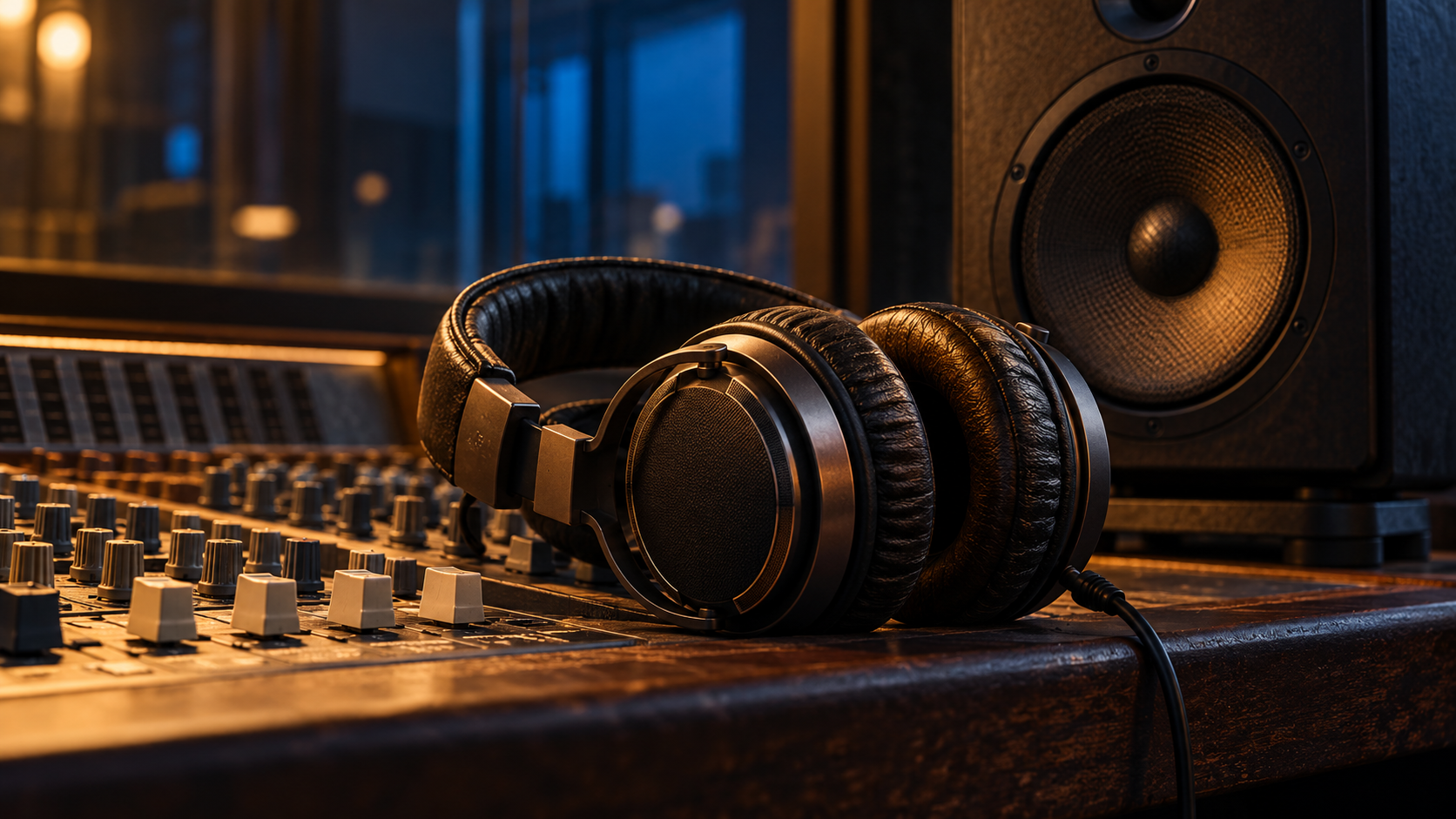
I do not remember Pops needing many second takes because he had made a mistake. That fascinated me as a kid. He could speak calmly and get through what he was doing with a control I admired.
When there was another take, I remember it often being about the feeling of the recording. He might not like how it had landed, or the technician might recommend another shot.
The words being right did not settle everything. There was still the way they had been spoken and the way the recording came back through the monitors.
I was interested in the equipment, but watching that part of the work gave me something else to notice. You could have a take that held together and still want to approach it again.
I would not turn my childhood memory into a claim that he never made mistakes. What stayed with me was how often the question seemed to be about the result: did it feel the way he wanted it to feel?
I return to that when I record my own voice or work on a piece of music. Getting through a passage matters. So does listening afterward. Sometimes I can hear that I hurried a part I wanted to leave room around.
Sometimes the first take has something I want to keep. Doing it again is useful when there is a reason. Repeating it just because another take is possible can send me away from what I liked in the first place.
Pops gave me a picture of someone listening to the work while he was making it. He knew his voice, and he cared about the recording that would reach other people.
That is what I remember when I think about a second take. Listen first. Find the reason. Then try it again.